How to properly appreciate Korean stone monuments: A 6-step checklist for a more
When you travel, it's easy to pass by historical sites with the thought, "I came here because it's famous." Especially in Korea, many stone structures appear to be simply piles of rocks, but within them lie the philosophies, architectural techniques, and social structures of people from hundreds of years ago. However, most tourists simply glance at them, thinking, "Why does this look so unimpressive?" or "Isn't this just a regular stone wall?"
This is the problem. The true value of a stone structure lies not in its appearance, but in what it represents. It's only when you understand how it was constructed, the principles behind its design, and the stories hidden within its weathered surfaces that you can truly appreciate it as a cultural heritage site.
This article provides practical guidelines that you can actually use in the field. It offers a system to help you understand what you are seeing at any historical site, allowing you to gain a deeper appreciation for its significance.
---
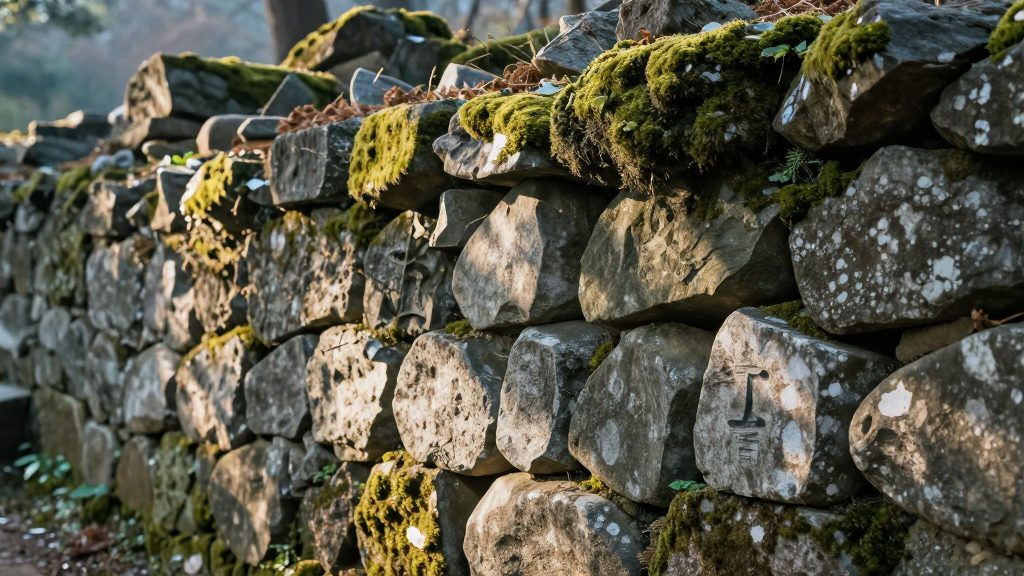
1. Why are the stones arranged and angled this way?
The first thing to observe at a stone structure is the arrangement of the stones. It's not random; there's a clear structural purpose behind it.
- The most common types of stone used are basalt, granite, and gneiss.
- The angle of the walls is typically between 80 and 85 degrees. This isn't a perfectly vertical structure because of resistance to vibration (earthquakes). A completely vertical wall is more likely to collapse under impact, while a slightly inclined structure disperses the energy of vibrations.
- The gaps and crevices between the stones are intentionally designed to prevent a complete seal. This provides essential space for expansion and contraction (due to temperature changes), which can cause the stones to swell or shrink.
For example, at Seokguram Grotto in Gyeongju, you can see that the stones are laid diagonally. This is to align with the "direction of potential cracks" in the material, preventing the stones from naturally splitting or breaking.
---
2. Reading the "Mind" of a Site: Differences Between Exterior and Interior Structures
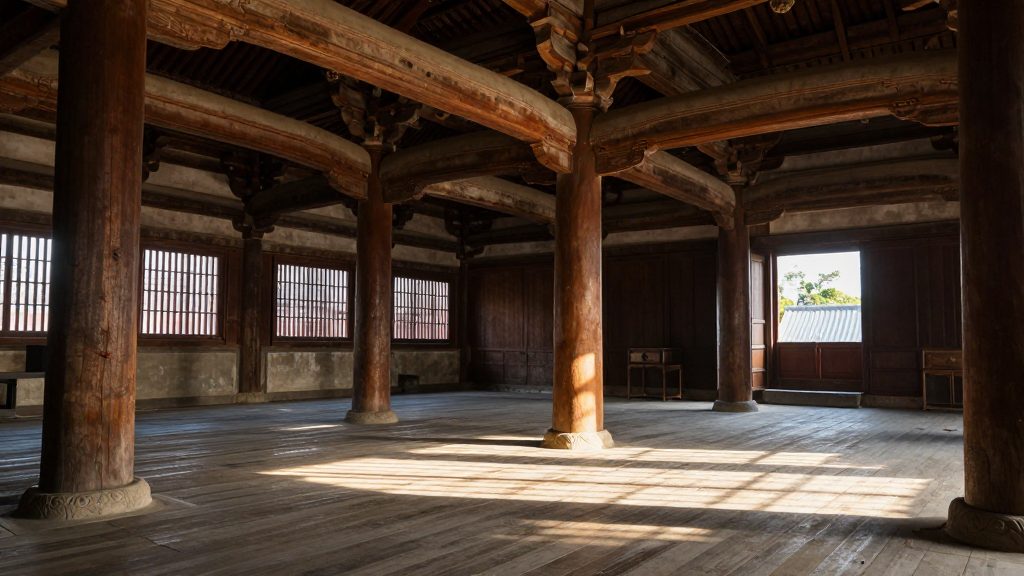
[Image: How to properly view Korean stone structures – a 6-step checklist for gaining practical insights on site]
Cultural heritage sites are not just buildings; they reflect the thought processes and belief systems of the people who created them.
- Exterior Structures: Typically, the exterior is designed to be strong and imposing, making entry difficult. Examples include reinforced walls, low doorways (less than 1.5 meters high), and rectangular pillar arrangements. These elements symbolize "defense" or "exclusion."
- Interior Spaces: In contrast, the interior is often characterized by open, spacious areas. This creates a sense of spiritual freedom, allows for the expansion of consciousness, or provides a space for connection with the divine.
For example, at the ancient fortress site in Buyeo, the exterior walls are thick and high, while the interior is a wide-open space. This reflects a transition from a "defense-oriented" mindset to one where political authority and sacred spaces were increasingly separated.
[Image: How to properly view Korean stone structures – a 6-step checklist for gaining practical insights on site]
---
[Image: How to properly view Korean stone structures – a 6-step checklist for gaining practical insights on site]
3. The "Placement" and "Touch" of Stones: Reading History Through Erosion Patterns
Every stone structure bears the marks of time. However, it's not just about whether something is "old"; you need to understand the patterns and direction of erosion.
- In areas with prevailing southwesterly winds (e.g., Jeollanam-do, Gyeongsang Province), you're likely to see more erosion on the western or southwestern walls. This is due to the consistent wear and tear from wind and rain.
- Indentations or marks on pillars or foundations: These indicate the presence of wooden supports in the past. The indentations show where wooden beams were inserted to provide support, revealing how the structure was originally used.
- The angle of reflection on worn surfaces: Areas with significant erosion not only show physical wear but also reflect the frequent contact (touch, footsteps) of people.
For example, at the interior base of Seokguram Grotto in Gyeongju, you can see a smooth, polished surface. This is evidence of people kneeling and praying there every day, representing a "sacred space" that has endured through time.
---
4. Prepare Your "Eyes" Before Visiting a Site
It's common to arrive at a site and realize you don't know what's important, so you simply pass by. To avoid this, you need to prepare in advance.
- 🔹 3 Basic Pieces of Knowledge: The period when the site was built (e.g., Unified Silla, Goryeo), its primary function (gate? temple? palace?), and the types of stone used.
- 🔹 Visual Focus Points: The "slope" of the walls, the "indentations" on the base, and the "symmetry" of the structure. These three elements are common to almost any stone structure.
- 🔹 Tools for Recording: A pen and paper or a smartphone's notes app. Instead of just taking pictures, ask yourself questions like, "Why is the slope of this stone like that?" or "What role did this indentation play?"
- 🔹 Comparative Perspective: Compare the site to other stone structures you know (e.g., Sakai Castle in Japan, European castles). Thinking about the similarities and differences will lead to a deeper understanding.
---
Advice for On-Site: When you arrive at a site, take just 3 minutes to "stand and think." Simply looking at the arrangement of stones, the angle of the walls, and the indentations on the base from three perspectives can give you a sense of "how this building was conceived." After that, cultivate your ability to see with those new insights.
This article is a practical guide to help you transform historical sites, which are often shrouded in the name of "history," into something that can be realistically seen and experienced. It's a system that anyone can use and apply.
In conclusion, appreciating a stone structure is not about saying, "It's beautiful" or "It's old." It's about asking, "Why were these stones stacked like this?" and "How did someone use this place?" The moment you ask those questions, you transform from a simple tourist into an interpreter of cultural heritage.
Related posts
7 Practical Tips for Appreciating Cultural Heritage (Essential Checklist for Exploring
Exploring Cultural Heritage: How to Connect with the Land – Okcheon Myeongryang Historic
Capturing Stunning Photos at Historical Sites: A Practical Guide from Composition to
Preserving Royal Architecture of the Joseon Dynasty: A Comparison of Methods Using Bricks
Popular posts
7 Practical Tips for Appreciating Cultural Heritage (Essential Checklist for Exploring
Exploring Cultural Heritage: How to Connect with the Land – Okcheon Myeongryang Historic
Capturing Stunning Photos at Historical Sites: A Practical Guide from Composition to
Comments 0